Rug size is the difference between a room that looks assembled and a room that looks decorated — and it is decided before you ever click buy. A rug too small makes furniture look like it is floating; a rug too large eats the floor and the budget. This guide gives the exact rules per room, the math behind them, and the shortcuts for the common room sizes.
The rule: at least the front legs of every seat in the arrangement rest on the rug. This single rule is why 8x10 is the living-room standard for most homes — it fits a sofa, two chairs and a coffee table with their front feet aboard. A 5x8 works in small living rooms where the seating hugs two walls. Anything smaller than 5x8 in a living room is an accent rug, and the room will read as one.
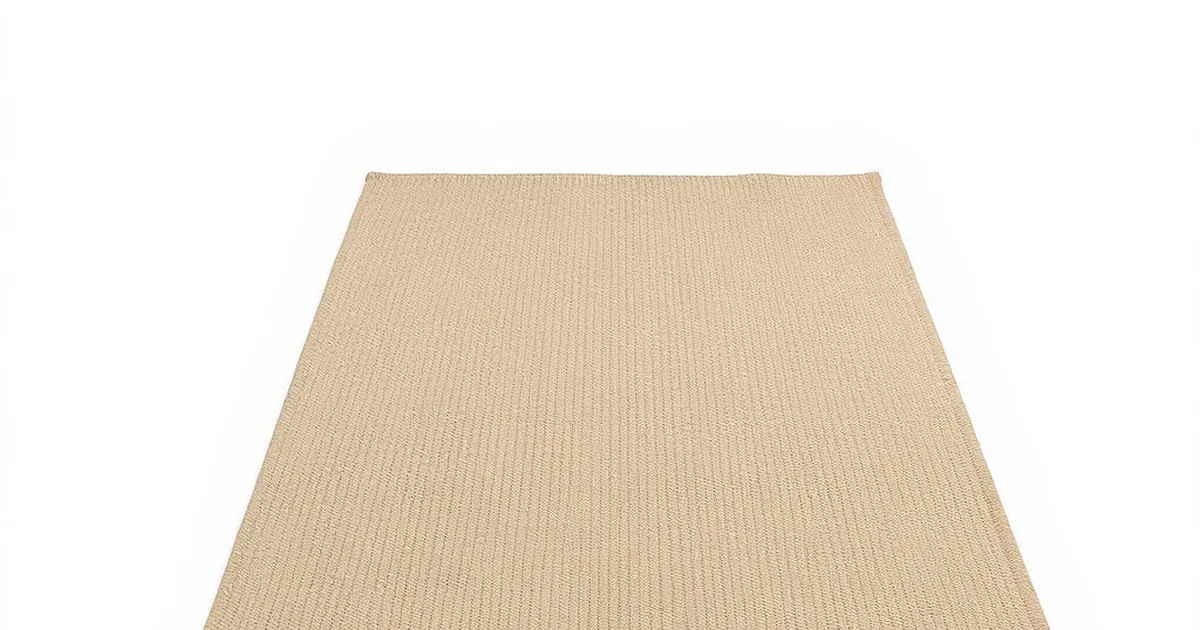
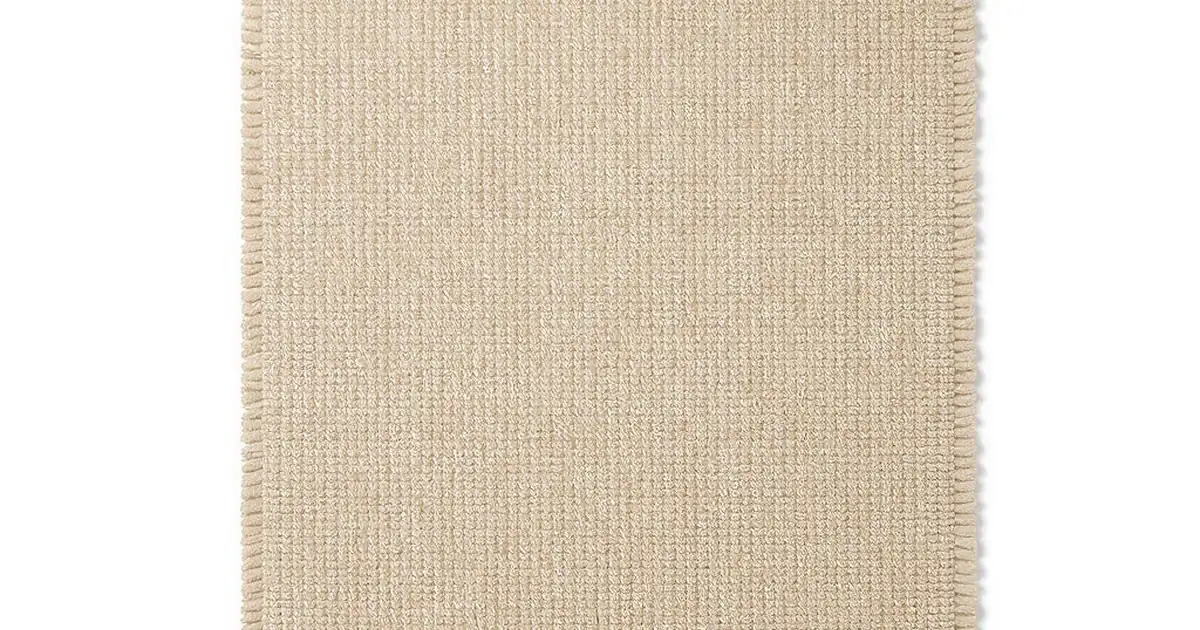
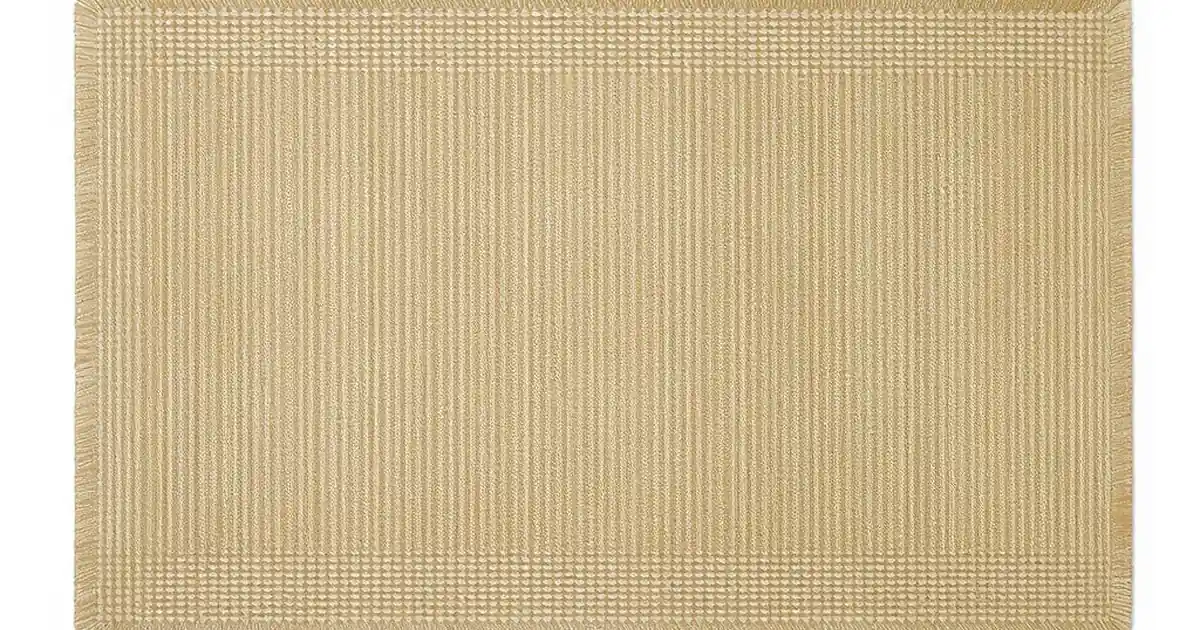
Very large rooms sometimes run two rugs — one anchoring the main seating, one defining a reading corner. This works when each rug follows the front-legs rule within its own zone; it fails when one giant rug tries to bridge zones that are too far apart. Our textured collection runs 3x5 through 8x10 precisely so zones can be dressed separately.
The rug must extend at least 24 inches beyond the table on all four sides — the space a pulled-out chair travels. Get this wrong and chairs catch the rug's edge every meal, which is how woven rugs unravel at the borders. For a standard 6-seat rectangular table, that means a minimum 8x10. Flatweave fibers — sisal and seagrass — are the dining-room favorites for a second reason: chairs slide on them without snagging, and crumbs vacuum out of the flat weave.
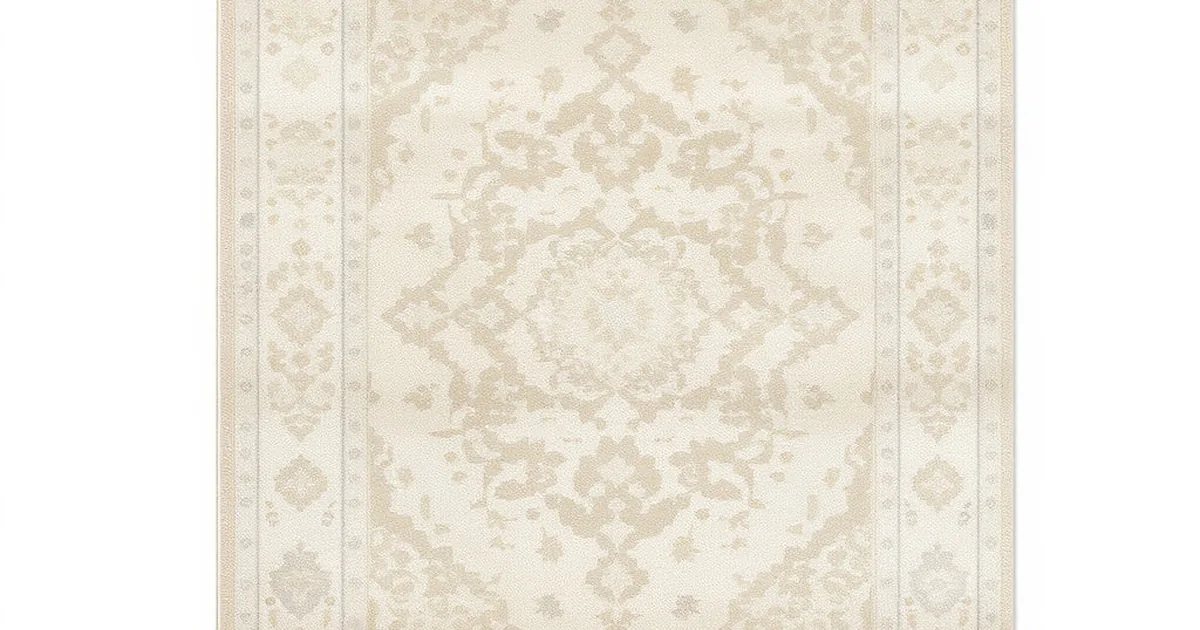
The rug should extend 18–24 inches beyond the foot and sides of the bed — the strip your bare feet land on every morning. A queen bed wants a rug at least 8 feet deep under it (an 8x10 turned sideways covers it generously); a king wants 9 feet. The alternative for smaller rooms: two runner-style rugs flanking the bed, which delivers the morning comfort without needing a rug the room cannot fit. This is the room where pile height pays — the high-pile wool heirloom exists for exactly this barefoot moment.
Runners in hallways leave 4–6 inches of floor visible on each side. Entries want the rug sized to the door's swing — and outside the door, a coir doormat sized to the doorway's width, because the best interior rug protection is a scraper at the threshold.
3x5: entry, reading nook, kitchen sink front, bathroom-large.
5x8: small living room, foot of queen bed, small dining nook.
8x10: standard living room, king bedroom, 6–8 seat dining table.
9x12 and up: great rooms, sectionals, dining for ten.
Every sizing conversation ends at the rug pad, because a pad changes how a rug of any size behaves. A pad adds a quarter inch of cushioning (comfort), stops the rug from sliding on hard floors (safety), prevents grit from grinding between weave and floor (longevity), and — the sizing connection — lets a slightly smaller rug hold its own in a large room, because the added thickness and grip make it read as substantial. Felt-rubber pads suit hard floors; felt-only pads suit carpet-over-carpet. Measure the rug, buy the pad an inch smaller on every side, and the jute rug you almost returned for feeling thin becomes the rug the room needed.
Three sizing sins make rooms feel smaller. The postage-stamp rug — too small to anchor anything, it makes the furniture look oversized and the floor look bare. The wall-to-wall ambition — a rug so large it touches baseboards, which reads as failed carpeting rather than a rug. And the floating island — a rug centered in the room with all furniture off it, which fragments the space into furniture and rug instead of one room. Follow the front-legs rule, the 24-inch rule and the 18-inch rule, and none of the three can happen.
Measure the room, measure the furniture, apply the rule for the room's function, and buy the size the math says — not the size the budget wishes for. A correctly sized jute rug at the right dimensions outperforms a beautiful rug at the wrong size every single time the room is used.